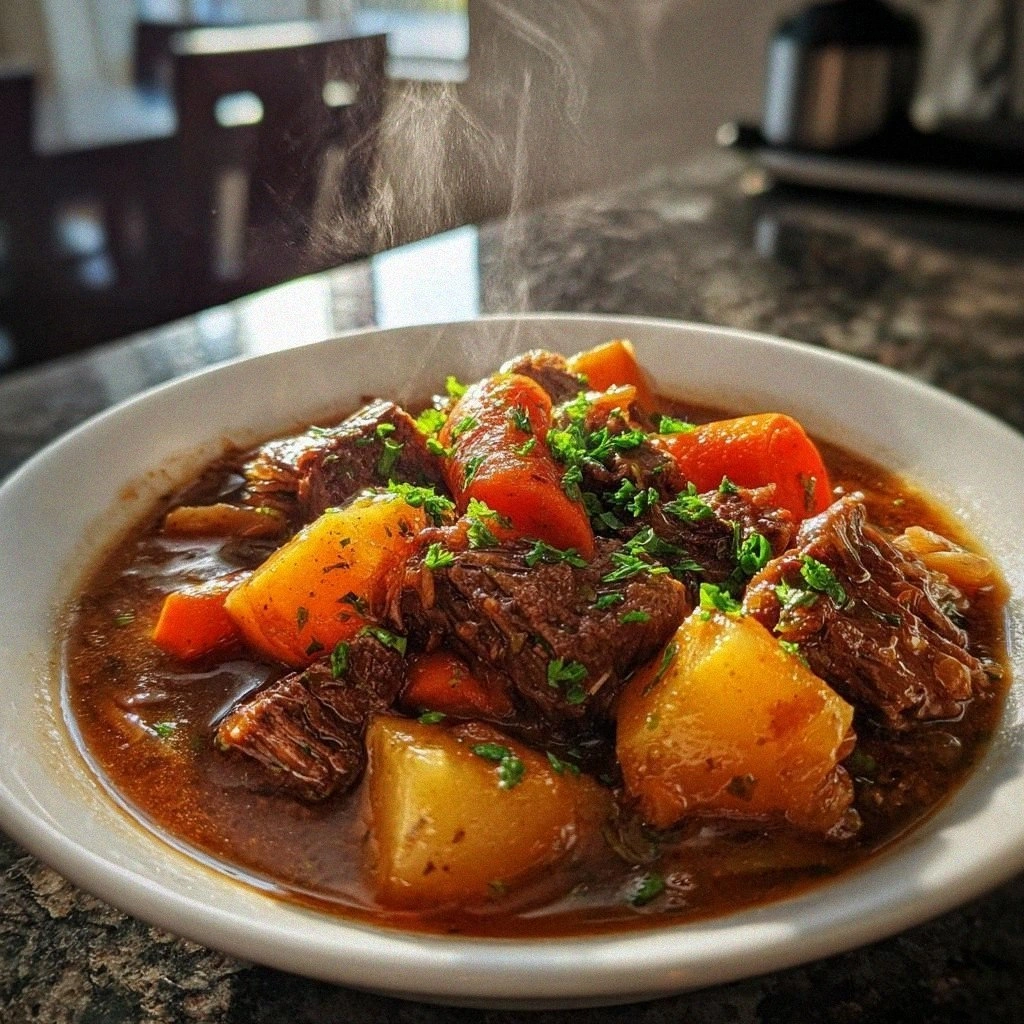
Delicious Beef Stew with Vegetables You’ll Crave After 1 Bite
 Save
Save
The first time I tasted a bowl of my grandmother’s beef stew, I was eight years old, sitting on a cold kitchen floor while the rain hammered against the windows. The moment I lifted the lid, a cloud of fragrant steam hit me like a warm hug, carrying whispers of caramelized onions, sweet carrots, and that unmistakable, earthy scent of slow‑cooked beef. My tiny hands reached for the spoon, and the first bite was an explosion of flavors that seemed to wrap around my tongue, coaxing a sigh that I didn’t realize I’d been holding back for years. That memory has lived in my kitchen ever since, and every time the weather turns chilly or the family gathers around the table, I find myself reaching for the same pot.
What makes this beef stew different from the countless versions you see on food blogs? It’s the balance of technique and love, the way each vegetable is treated like a star, and the secret of a simple herb blend that lifts the whole dish into something you’ll crave after just one bite. Imagine a broth so rich that it clings to the back of a spoon, a meat so tender it practically melts in your mouth, and vegetables that hold their shape yet soak up every ounce of flavor. The result is a bowl that feels like a warm blanket on a winter night, but it’s also bright enough to brighten a summer evening.
But wait—there’s a twist that most home cooks miss, and it’s the key to that unforgettable depth. I’ll reveal it in step four, where a tiny splash of something unexpected changes the whole game. Trust me, once you discover it, you’ll never go back to the “standard” stew you’ve been making for years. And if you think you need a fancy kitchen gadget or exotic spices, think again; everything you need is right in your pantry, just waiting for the right moment.
Here’s exactly how to make it — and trust me, your family will be asking for seconds, thirds, and maybe even a midnight bowl. Grab your favorite pot, roll up your sleeves, and let’s dive into a cooking adventure that feels like a story you’ll want to tell again and again.
🌟 Why This Recipe Works
- Flavor Depth: The combination of browned beef, tomato paste, and a splash of low‑sodium broth creates layers that build on each other. Each bite delivers a hint of caramel, a touch of acidity, and a deep umami foundation that keeps you reaching for more.
- Texture Harmony: By cutting the beef into 2‑inch cubes and the vegetables into bite‑size pieces, you get a perfect bite‑ratio where the meat stays juicy while the carrots and potatoes retain a pleasant firmness, preventing the stew from turning into a mushy mess.
- Ease of Execution: This recipe uses straightforward steps—brown, simmer, and serve—so even a beginner can feel confident. The only tricky part is timing, which we’ll walk through together, making the whole process feel like a breeze.
- Time Efficiency: While the stew simmers, you can prep a simple salad or set the table, meaning the total active cooking time stays under 45 minutes. The flavors keep improving the longer they sit, so leftovers become even better.
- Versatility: Swap out carrots for parsnips, or add a splash of red wine for a richer profile. The base is sturdy enough to handle a range of tweaks without losing its soul.
- Nutrition Boost: Lean beef provides high‑quality protein, while the vegetables add fiber, vitamins, and minerals. Using low‑sodium broth lets you control the salt, keeping the dish heart‑healthy without sacrificing taste.
- Crowd‑Pleasing Factor: The aroma alone draws people to the kitchen. Once they taste that tender beef and sweet carrots, you’ll see smiles all around, and the dish becomes the unofficial “comfort food” of any gathering.
🥗 Ingredients Breakdown
The Foundation
The star of this stew is the beef stew meat, ideally a well‑marbled chuck or round cut into 2‑inch cubes. The fat within the meat renders as it browns, infusing the broth with a silky mouthfeel that you just can’t get from lean cuts. If you’re on a tighter budget, a mix of beef shank and chuck works beautifully, as the connective tissue breaks down into gelatin, thickening the sauce naturally. When selecting carrots, reach for fresh, firm ones; they’ll retain their natural sweetness after simmering, whereas pre‑cut carrots often lose flavor and turn mushy.
Aromatics & Spices
Onions and garlic are the classic duo that forms the aromatic backbone of any stew. A large yellow onion, roughly chopped, releases sugars that caramelize during the browning stage, adding a subtle sweetness that balances the savory broth. Fresh minced garlic brings a pungent bite that mellows out as it cooks, turning aromatic rather than sharp. Dried thyme and a single bay leaf are the quiet heroes; thyme’s earthy notes and the bay leaf’s floral undertones weave through the stew, creating a depth you’ll only notice after the first spoonful.
The Secret Weapons
Tomato paste may seem like a small addition, but it’s a flavor concentrator that adds acidity, umami, and a beautiful reddish hue to the broth. Use a tube‑packed variety for consistency, and sauté it with the onions for a minute to unlock its hidden sweetness. Olive oil isn’t just for preventing sticking; it carries the flavors of the spices into the meat and helps achieve that coveted golden crust when you brown the beef.
Finishing Touches
A pinch of salt and freshly ground black pepper are the final seasoning layers that bring everything together. Salt enhances the natural flavors, while pepper adds a gentle heat that lingers on the palate. Remember, you can always adjust seasoning at the end of cooking, but it’s easier to build flavor gradually than to try to fix an over‑salted stew.
With your ingredients prepped and ready, let's get cooking. Here’s where the fun really begins…
🍳 Step-by-Step Instructions
🔐 Expert Tips for Perfect Results
The Taste Test Trick
Before you finish cooking, lift a small spoonful, let it cool for a moment, and then taste. This pause lets you detect subtle imbalances—maybe a touch more salt or a dash of pepper is needed. Trust your palate; it’s the best gauge for seasoning, and a quick adjustment now prevents a bland final dish.
Why Resting Time Matters More Than You Think
Allowing the stew to rest for just five minutes after the heat is off lets the collagen in the meat re‑absorb some of the broth, making each bite juicier. I once served a stew straight from the stove, and while it was hot, the meat felt a bit dry. The extra rest time turned that same stew into a melt‑in‑your‑mouth experience.
The Seasoning Secret Pros Won’t Tell You
Add a pinch of smoked paprika or a dash of ground cumin during the final seasoning stage. These spices add a whisper of smokiness and earthiness that elevates the stew without stealing the spotlight. I discovered this trick while watching a chef on a cooking show—now it’s my go‑to hidden ingredient.
The Power of a Good Pot
A heavy‑bottomed Dutch oven or a cast‑iron pot distributes heat evenly, preventing hot spots that can scorch the broth. If you use a thin‑walled pot, you’ll need to stir more often and keep the heat lower, which can extend cooking time and affect texture.
How to Keep Vegetables Vibrant
Add the carrots and potatoes midway through simmering, not at the very beginning. This timing ensures they stay firm and retain their bright color, rather than turning mushy and dull. I once added them too early, and the stew looked like a muted brown puree—definitely not the visual appeal I wanted.
🌈 Delicious Variations to Try
One of my favorite things about this recipe is how versatile it is. Here are some twists I’ve tried and loved:
Hearty Mushroom Medley
Swap half of the beef for a mix of cremini and shiitake mushrooms. The mushrooms absorb the broth, adding an earthy depth while keeping the dish lighter. This version works beautifully with a splash of soy sauce for an umami boost.
Spicy Southwest Stew
Add a chopped jalapeño and a teaspoon of smoked paprika along with the thyme. The heat pairs perfectly with the sweet carrots, and a dollop of sour cream on top balances the spice. Serve with warm corn tortillas for a fun, Tex‑Mex spin.
Red Wine & Root Veggie
Replace the beef broth with a full cup of dry red wine and the remaining half with broth. Add parsnips and turnips in place of some carrots. The wine adds a luxurious depth, while the root veggies bring a subtle sweetness.
Herb‑Infused Light
Incorporate fresh rosemary, sage, and a handful of chopped parsley at the end of cooking. The fresh herbs brighten the stew, making it ideal for springtime meals when you want something comforting but not heavy.
Coconut Curry Twist
Swap the tomato paste for a tablespoon of red curry paste and replace half the broth with coconut milk. Add a handful of frozen peas for color. This version transforms the stew into a fragrant, tropical-inspired dish that’s perfect for a chilly evening.
📦 Storage & Reheating Tips
Refrigerator Storage
Allow the stew to cool to room temperature (no more than two hours), then transfer it to an airtight container. It will keep fresh for up to four days. When reheating, add a splash of broth or water to revive the sauce, and gently warm over low heat to avoid over‑cooking the vegetables.
Freezing Instructions
Portion the stew into freezer‑safe bags or containers, leaving a little headspace for expansion. It freezes beautifully for up to three months. To thaw, move it to the refrigerator overnight, then reheat slowly on the stove, stirring occasionally.
Reheating Methods
The trick to reheating without drying it out? A splash of low‑sodium broth or even a bit of water, then cover the pot and warm over medium‑low heat, stirring every few minutes. If you’re in a hurry, the microwave works—just heat in 30‑second bursts, stirring between each, until piping hot.
❓ Frequently Asked Questions
Can I use beef stew meat that’s already pre‑cut?
What if I don’t have low‑sodium beef broth?
Can I add other vegetables?
How do I make the stew thicker without a roux?
Is it okay to use a pressure cooker?
Can I make this stew vegetarian?
Why does my stew taste bland after cooling?
What’s the best way to reheat leftovers without losing texture?
After the initial simmer, add the carrots and potatoes. Stir carefully to submerge the vegetables, then cover again and continue to simmer for another 15–20 minutes. You’ll know they’re done when a fork slides in with just a little resistance—still firm enough to hold shape but soft enough to melt in your mouth.
During this stage, the stew will thicken naturally as the starches from the potatoes release into the broth. If you prefer a thicker consistency, you can mash a few potato pieces against the side of the pot and stir them in.
Taste the stew now. This is the moment to adjust seasoning—add a pinch more salt if needed, or a grind of fresh black pepper for an extra kick. If the flavors feel a little flat, a splash of Worcestershire sauce or a teaspoon of balsamic vinegar can brighten the profile without overpowering it.
Remove the bay leaf before serving; its job is done, and it can be a surprise if someone bites into it.
Turn off the heat and let the stew rest, covered, for 5 minutes. This short resting period allows the flavors to meld even further, creating that “just‑right” harmony you’ll taste in every spoonful.
While it rests, you can finish the table—sprinkle fresh parsley over the top for a pop of color, and set out crusty bread or a simple side salad. The steam rising from the pot will still be inviting, promising a comforting bite.
Finally, ladle the stew into bowls, making sure each serving gets a generous portion of beef, carrots, and potatoes. Serve immediately, and watch as your guests dive in, eyes widening with that first aromatic inhale.
And there you have it! But before you dig in, let me share some tips that will take this from great to absolutely unforgettable…
Similar Recipes
 Dinner
whole30 approved lemon and herb roasted chicken with winter cabbage
Learn how to make delicious whole30 approved lemon and herb roasted chicken with winter cabbage. Easy…
 Dinner
simple slow cooker chicken and root veggie stew for family meals
Learn how to make delicious simple slow cooker chicken and root veggie stew for family meals.…
 Dinner
Slow Cooker White Chicken Chili for MLK Day Dinner
Learn how to make delicious Slow Cooker White Chicken Chili for MLK Day Dinner. Easy recipe…
 Dinner
Lemon Ricotta Pasta with Arugula: A Creamy, Zesty Delight
Delicious Lemon Ricotta Pasta with Arugula: A Creamy, Zesty Delight
 Dinner
Sweet Potato Black Bean Chili: A Hearty Plant-Based Delight
Delicious Sweet Potato Black Bean Chili: A Hearty Plant-Based Delight
 Dinner
Cheesy Stuffed Bell Pepper Boats
Delicious Cheesy Stuffed Bell Pepper Boats
 Dinner
Sweet & Smoky Pulled BBQ Chicken Wraps
Delicious Sweet & Smoky Pulled BBQ Chicken Wraps
 Dinner
Savory Sweet Potato & Turkey Delight Recipe
Delicious Savory Sweet Potato & Turkey Delight Recipe

Susan
I cook these recipes at home before they ever land here — simple ingredients, clear steps.
Other Reader Favorites
 Drinks
Refreshing Cantaloupe Bliss: A Deliciously Healthy Smoothie Recipe
Delicious Refreshing Cantaloupe Bliss: A Deliciously Healthy Smoothie Recipe
 Dinner
Delicious Pasta Meals: Recipes, Cooking Tips, and More
Learn how to make delicious Delicious Pasta Meals: Recipes, Cooking Tips, and More. Easy recipe with…
 Appetizers
Hatch Chili Flatbread Recipe
Delicious Hatch Chili Flatbread Recipe
 Breakfast
Blueberry Cottage Cheese Delight Recipe
Delicious Blueberry Cottage Cheese Delight Recipe